What did the 2026 elections reveal about what voters care about, what they search for online, and the messages that move them? And how can nonprofit advocates turn those insights into smarter digital strategies and more authentic collaborations with content creators?
After this year’s historic midterm elections, RAD Campaign convened our experts and partners in the thick of it all for a post-election recap that explored three critical lenses —data, content, and culture—and what they mean for nonprofit advocacy, digital engagement, and campaigns heading into 2027.
Culture & Messaging: What the Polls Reveal About Winning Messages
Stefan Hankin, founder and president of Lincoln Park Strategies, joined RAD Campaign founder Allyson Kapin to unpack what midterm and post-midterm polling revealed about public attitudes, winning messaging, and the demographic voting shifts over the past three election cycles.
Beyond the generally historic sweep among Democratic candidates for seats in both the House and Senate, support among constituencies including Hispanics and younger voters shifted significantly from 2024 to 2026.
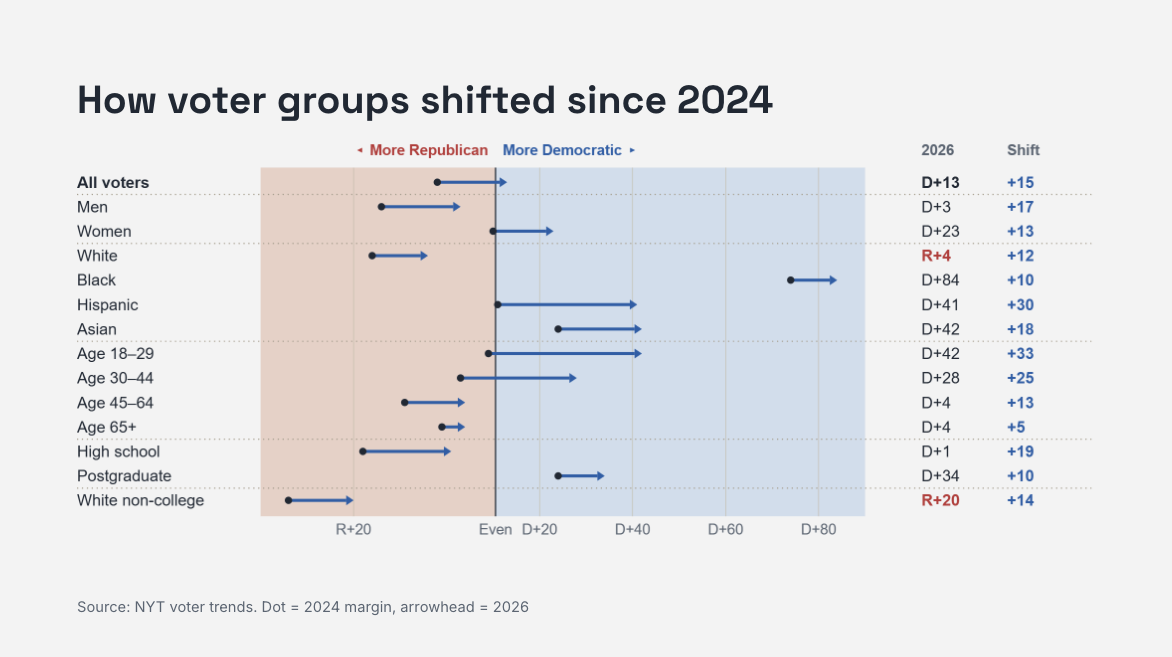
Almost all demographic breakdowns showed a pronounced shift to the left, attributed largely to dissatisfaction with the current policy direction and political climate. Everyday issues and messages drove results — like people struggling to pay their bills — rather than wedge and culture war issues that have taken up so much attention and energy in recent years.
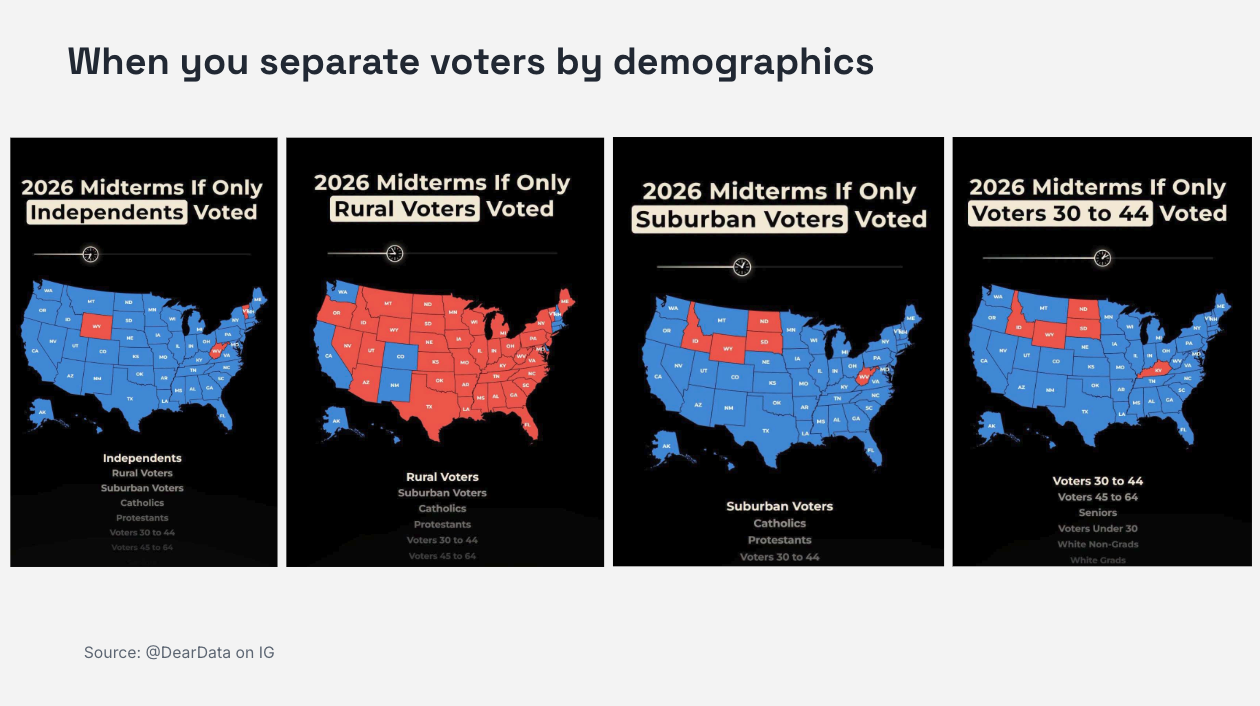
For nonprofits, it’s a good reminder to stay focused on your mission and tangible impact, rather than getting caught up in waves of cultural distractions that can pull you away from your core focus. Ultimately, real results can drive voter (and supporter) preferences when emotion and rhetoric fall short in delivering on promises.
Search & Insights: The Election Issues People Were Searching For
Sam Tate, Digital Experience and Project Director at RAD Campaign, explored how people searched for election issues and ballot measures in their own words, and how nonprofits can turn those insights into content opportunities for year-end fundraising and 2027 campaigns.
We explored how tools like Google Trends can help organizations identify emerging concerns, sharpen content planning, and increase visibility in search results and AI-generated overviews.
People search for issues in very real time, and in plain language. A key takeaway for nonprofits is to speak and write in the ways that your audience is most likely to understand, and avoid internal policy wonk and technical jargon that people are likely to overlook or find confusing. Search traffic peaked on or after Election Day for several abortion ballot measures, shifting from searches for what they were about to if they passed.
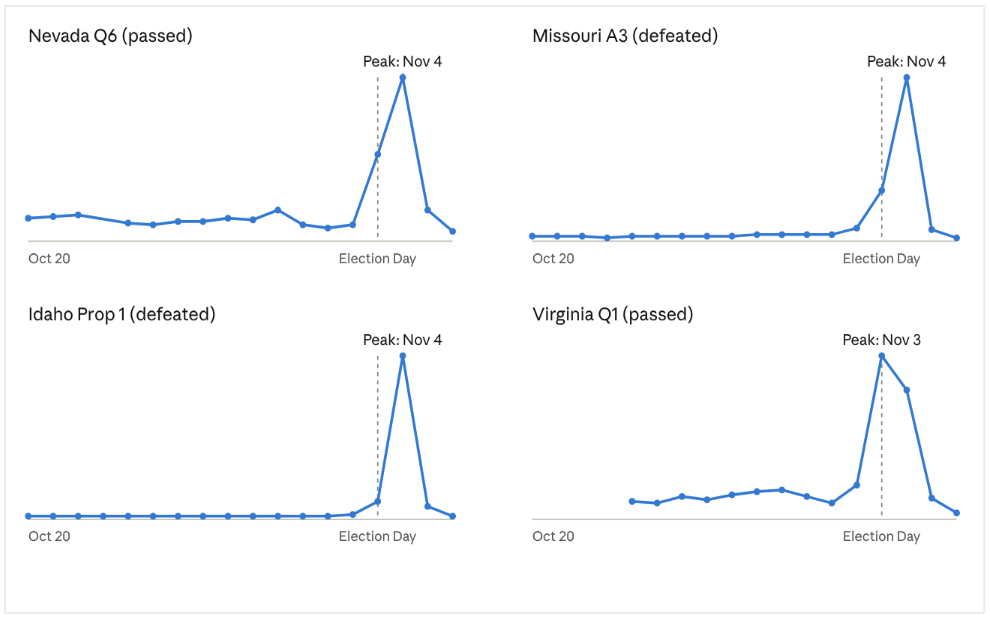
The above chart shows how search interest peaked after Election Day for three of the four abortion rights measures.
Check out RAD Campaign’s toolkit, including an AI Skillsheet and sample prompts, with a filterable spreadsheet of passed 2026 ballot measures, organized by advocacy issue, with search insights and content opportunities, plus a set of prompt templates to plug into AI for further analysis of the data.
Content & Influencers: Turning Authentic Connections into Advocacy
Kim Sontag, Director of Digital Media at the National Organization for Women (NOW), joined RAD Campaign cofounder Allyson Kapin to share how NOW worked with RAD to cultivate an organic influencer community to expand reach, deepen engagement, and build a powerful network of visibility and mutual support through an intense election cycle.
From the reckoning over sexual assault on college campuses to concerns about voting machines changing some people’s votes during early voting, we explored how authentic creator relationships can help advocacy organizations respond to fast-moving issues in real-time and connect with new audiences.
Indeed, content creators played a big role in shaping election news and driving conversation. Overall, polls show that most people reported getting information from content creators that shaped their perspectives on political issues — including 77% of Americans age 18-34 according to CIRCLE (a RAD client), and 64% of all adults (YouGov & SaySo).
NOW’s strategy included testing paid partnerships, but their best-performing content has been with a network built of organic, like-minded content creators who care deeply about women’s rights and their core issues. Their content partners have followings ranging from 1500 people to 2M+ people. Size doesn’t matter. The people matter.
The authentic connections and real relationships between now and their content partners is what drives results. For example, a voting rights PSA with partner BlairImani resulted in thousands of calls and messages to Congress highlighting the dangers of the misleadingly named Save America Act.
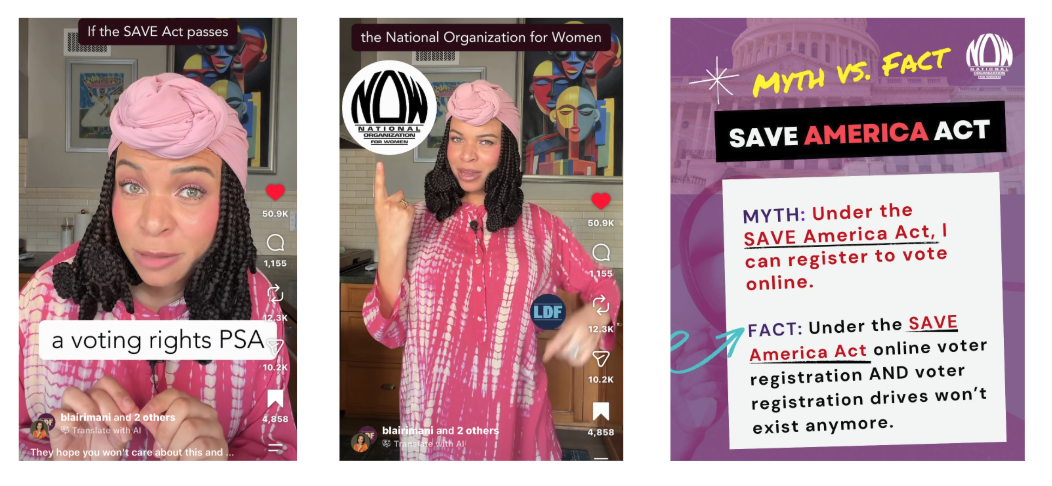
The results reinforce the strategy. For NOW, the content partner relationships saw a 50% increase in total views and tens of thousands of new followers on Facebook, plus a 125% increase in reach and 38% increase in followers on Instagram, and a huge 1000% increase in video views on TikTok over the last 90 days.
For nonprofits, NOW’s strategy points to the value of nurturing real relationships that are a win for both sides. When organizations can harness the power of real support over transactional relationships, content creators can benefit from the relationship with amplified visibility of their own, as much as they can add value to the conversation.