Leading up to the midterm elections, Human Rights Campaign (HRC) hired RAD Campaign to conduct an assessment and recommend online tools and strategies for a campaign to build distributed political power in state and local elections.
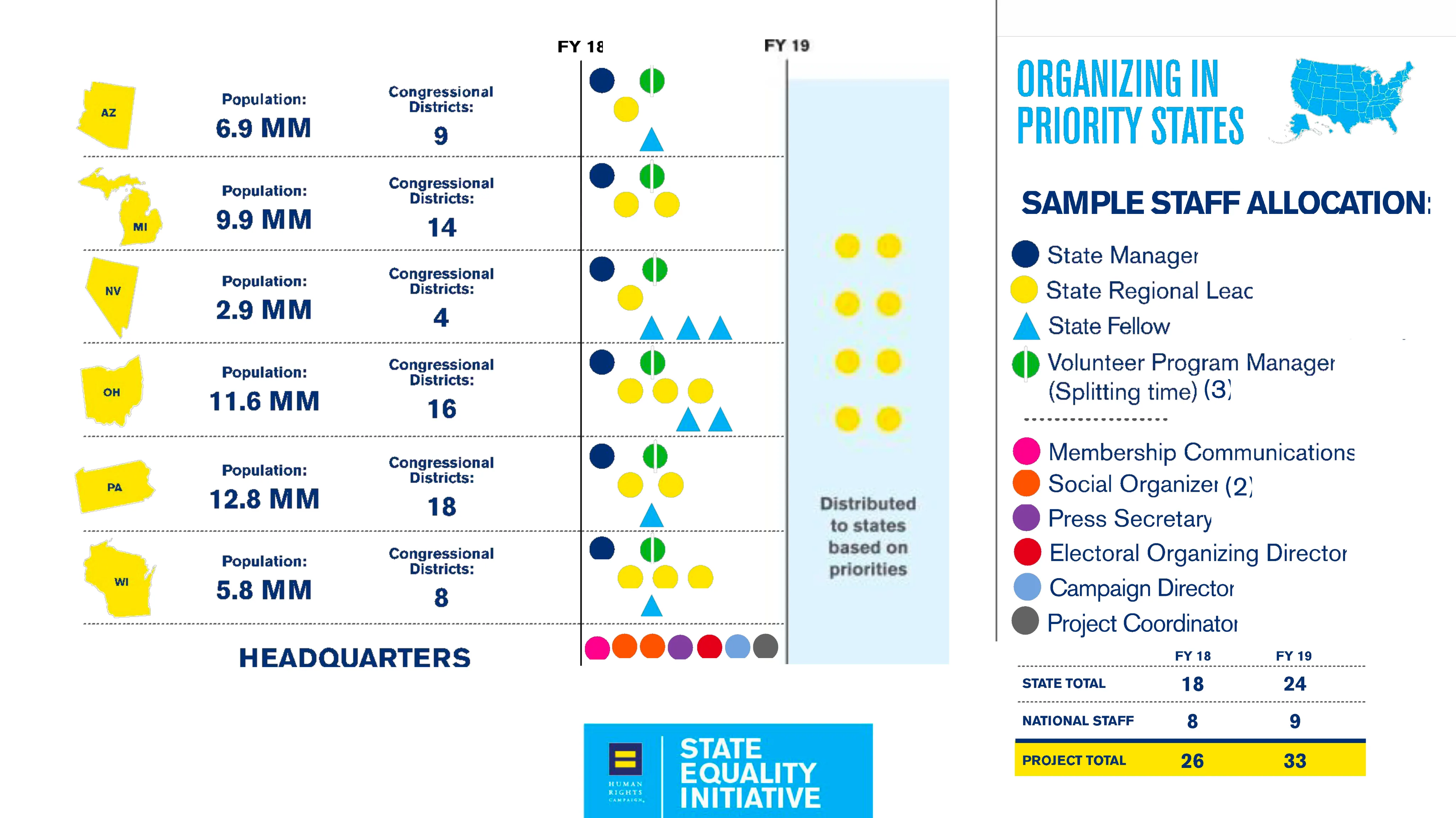
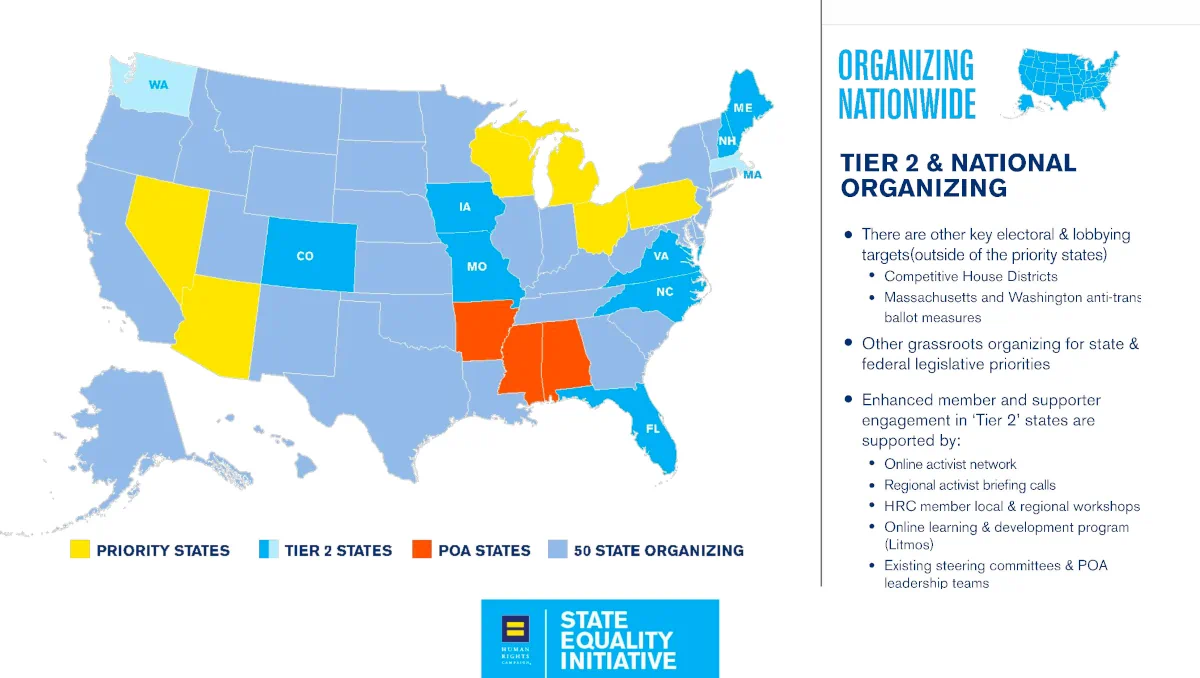
While HRC had (and has) a strong national presence, debates and policy battles over LGBTQ+ issues are increasingly moving to the state and local levels. To build their power and organize activists throughout the nation, HRC needed clear, real-time analysis and recommendations to help the organization’s leaders and staff develop empowered teams of advocacy volunteers to help win protections for LGBTQ+ communities.
RAD Campaign spoke with key staff from across HRC, including field operations, policy, volunteer programs, fundraising and membership, digital, email, and social media communications teams. We facilitated conversations with people working on distributed campaigns across various other national nonprofits to gather data, and spoke with several advocacy platforms and software vendors.
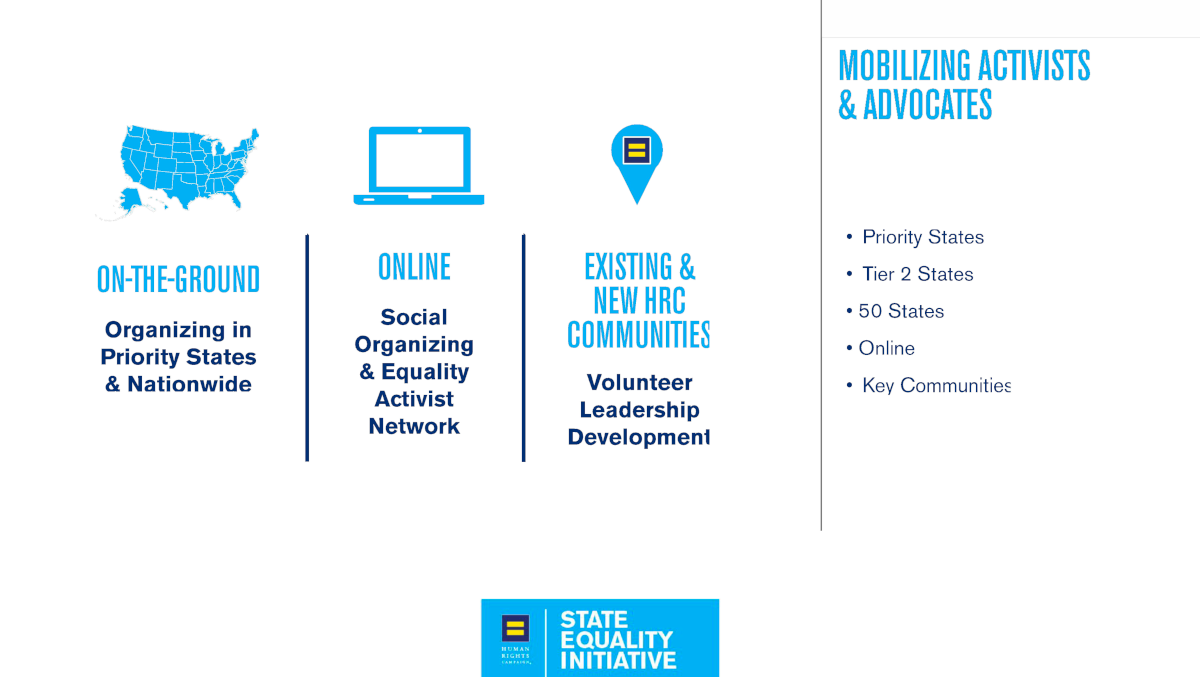
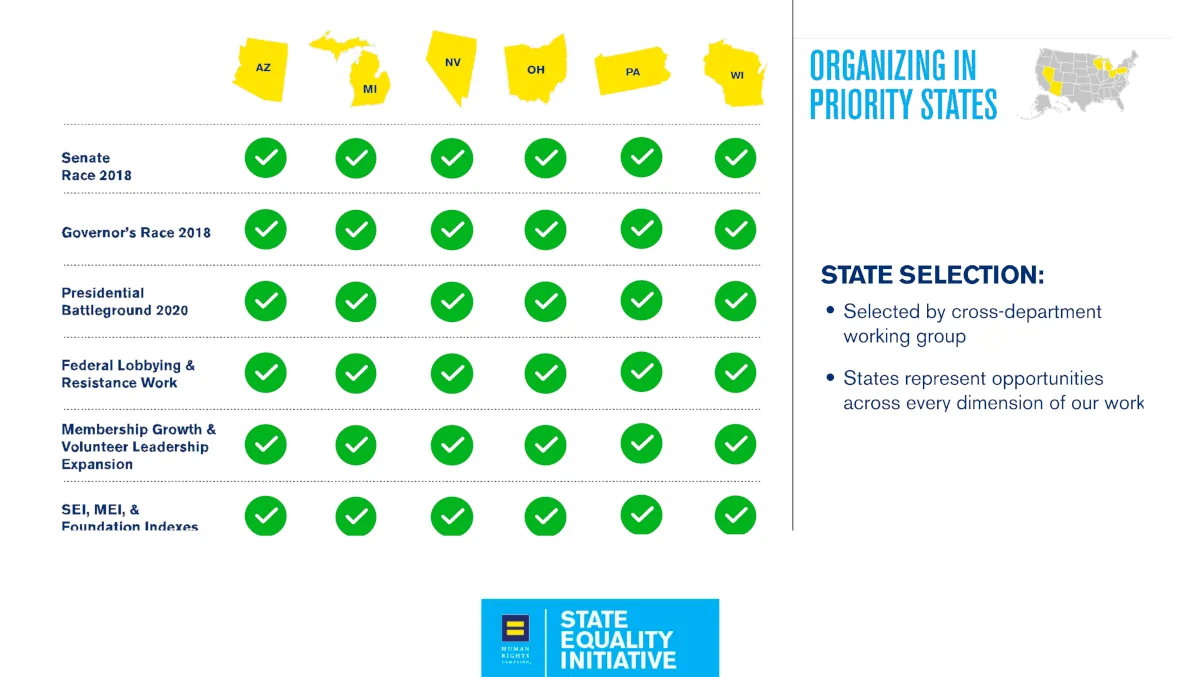
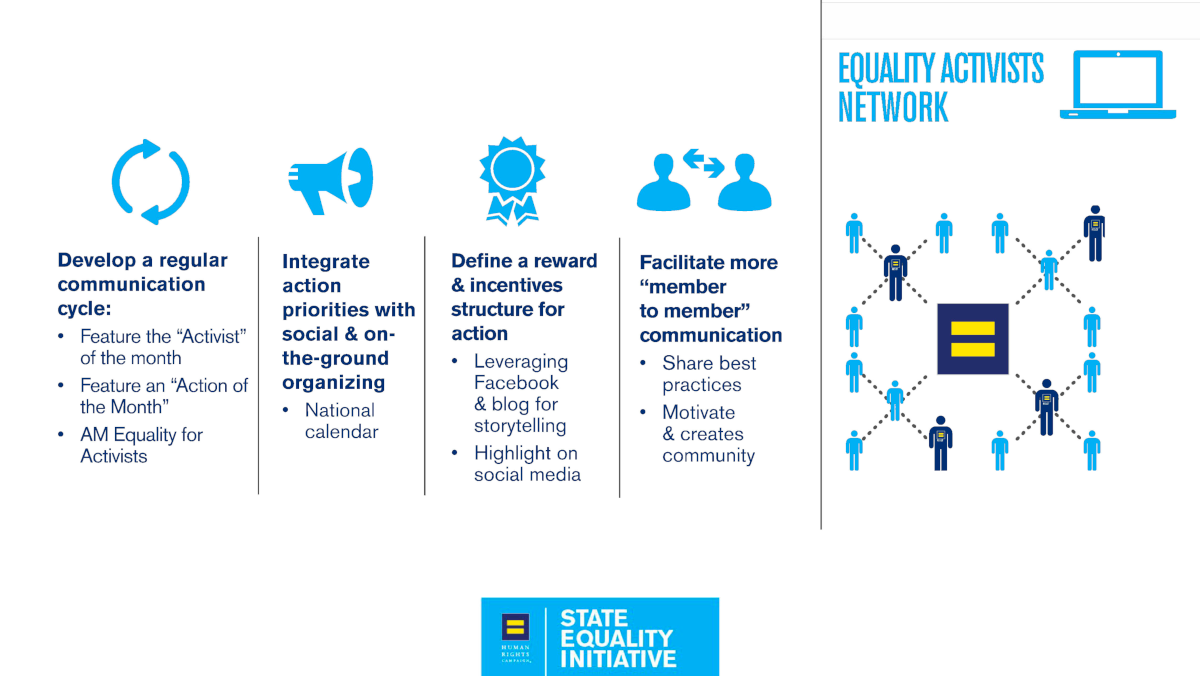
We looked at how staff, volunteers, board members, and supporters of all levels can cultivate and sustain a culture that scales distributed organizing. We also reviewed dozens of apps and tools and surfaced best practices and lessons that HRC staff and volunteers can apply in their work.
The final product culminated in a detailed report and analysis of the tools HRC should consider incorporating, how they could better leverage their use of existing tools, as well as how they could leverage technology, in general, to activate and energize their base. HRC has adopted many of the recommendations, tools, and strategies, and is on track to be a strong voice in state and local elections.
The Results
Seven million people voted in key elections during the midterms, providing margins of victory in key and critical races across the country. In turn, 24 anti-equality House incumbents were replaced with HRC-backed candidates who were committed to moving equality forward.